It is 28 degrees on a Tuesday morning in Washington. You start the car, push the defrost button, and wait. The fan is roaring, the vents are hot enough to make your knuckles sweat, and there is still a stubborn gray haze sitting across the bottom third of the windshield. You wipe it with a glove, which makes it worse. You pull out onto Route 19 or merge onto I-70 squinting through a clear patch about the size of a dinner plate.
Most drivers blame the cold. Some blame the blower motor, or dirty glass, or the fact that three people just got in the car with wet boots. Very few people blame the air conditioning, because who thinks about the AC in November?
Here is the part almost nobody learns in driver’s ed: on most vehicles, your defroster and your air conditioner are the same system. Push defrost, and the AC compressor comes on whether you asked for it or not. So when your AC quits, it does not just cost you a cool cabin in July. It costs you a clear windshield in January.
The Part Nobody Tells You: Defrost Is an AC Function
Your defroster gets its heat the way you would expect. Engine coolant runs through the heater core, fresh air is blown across that core, and the warmed air is ducted up and spread across the inside face of the windshield. That is the heating half of the job, and it is the half everybody knows about.
The half nobody knows about is the drying. Before that air reaches the heater core, it is often routed through the air conditioning evaporator first, where it gets cooled and dehumidified. Then it gets reheated and sent to the glass. It sounds backwards to cool air on purpose before heating it, but there is a good reason: dry warm air has a much greater capacity to absorb water off the glass than warm humid air does. Dehumidify first, reheat second, and the fog lifts fast.
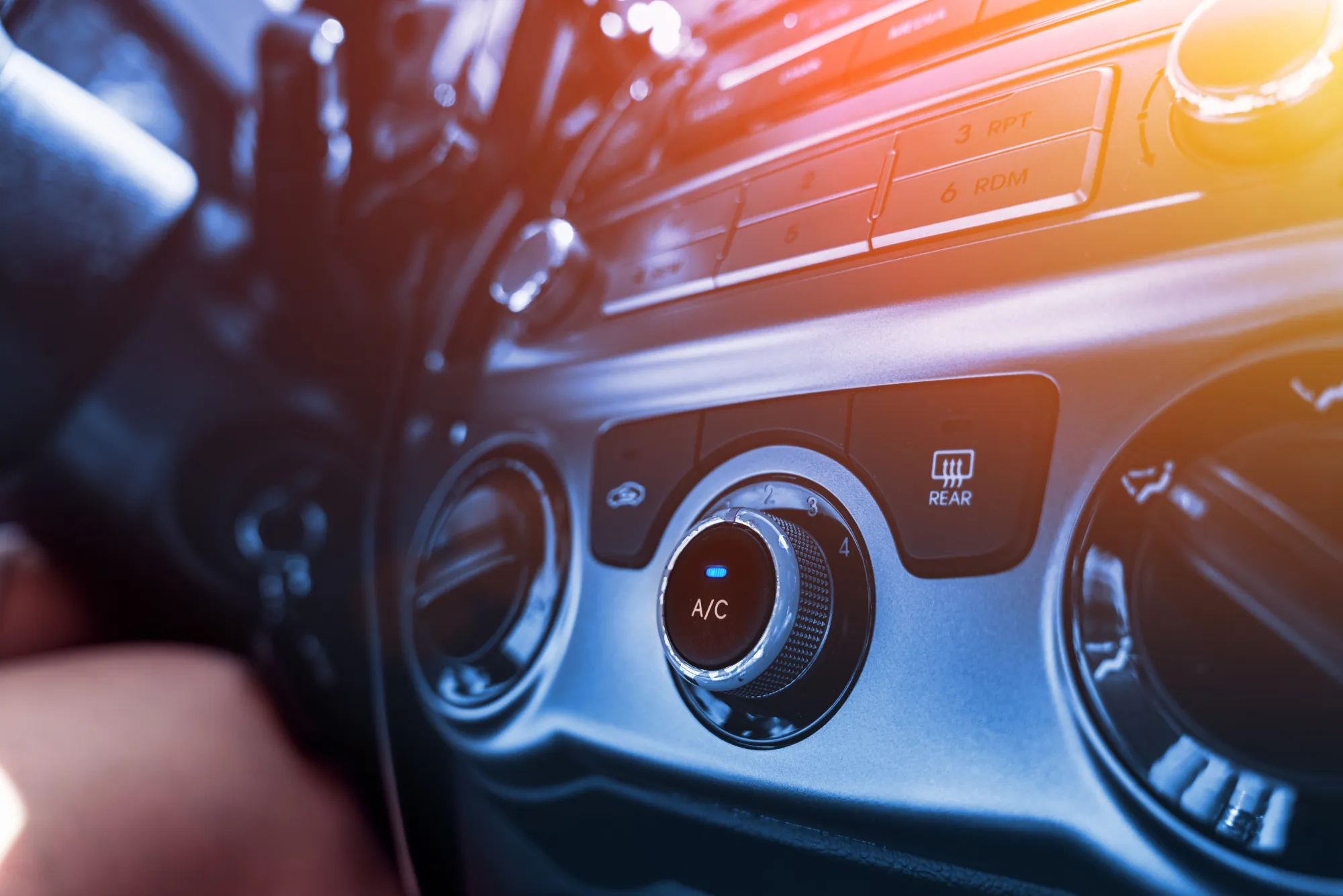
That is why, in modern vehicles, selecting the defroster often switches the air conditioning on automatically with no further action from you. Some cars light up the AC indicator when you do it. Plenty of them do not, especially if you leave the climate control on AUTO, so you would never know the compressor was involved at all.
CarParts.com puts the consequence about as plainly as it can be put: if your vehicle’s A/C does not work, your windshield might still fog up even with the defroster on. The heat still arrives. The drying does not.
Why a Dead AC System Hides All Winter
An air conditioning system that has lost its refrigerant charge is loud about it in July. You notice on the first hot day, you notice within about a minute, and you call a shop.
An air conditioning system that loses its charge in October is completely silent about it. Nobody is asking it for cold air. The cabin is warm because the heater core is doing that job on its own. The only symptom is a windshield that takes three minutes to clear instead of thirty seconds, and fog that creeps back the moment you turn the fan down. That does not read as a mechanical failure. It reads as weather.
So the failure hides. A charge that leaked out sometime in the fall goes unnoticed through Thanksgiving, through the January cold snaps, through the wet gray weeks in March, and finally announces itself on the first 88-degree afternoon in June when the vents blow warm. By then, the leak has had eight or nine months to do damage that a September appointment would have prevented.
This is the quiet reason winter matters more for AC than summer does. AAA describes fog as condensation forming when the water vapor near the glass hits the dew point, which is exactly what happens when a warm damp interior meets cold glass on a car parked outside overnight in Washington County. Wet coats, breath, snow tracked in on floor mats, a travel mug of coffee. The inside of your car in November is a humidity generator, and the tool designed to strip that humidity out is the AC compressor.
Visibility is not a comfort issue, either. Driving in winter conditions is already the hardest driving we do around here, and doing it while looking through a haze is not a margin anyone should be giving away.
How to Tell If Your Car AC Defroster Is Quietly Out of the Picture
You do not need gauges to get a strong hint. Run through this on the next cold morning:
- The windshield clears slowly. Full defrost, full fan, and it still takes minutes rather than seconds.
- The fog comes right back. You get it clear, ease off the fan, and the haze returns within a block or two.
- Nothing changes when you press the AC button. With the engine running, pressing AC should produce a faint click and a small change in engine note as the compressor clutch engages. Silence and no change is a real clue.
- The AC light will not stay on. It illuminates and then quits, or never lights at all.
- The AC blew warm the last time you tried it. If it did nothing useful in August, it is doing nothing useful for your defroster in December either.
- There is a musty smell, or the inside of the glass streaks and films over. Both point at moisture management that is not working the way it should.
If you leave your climate control on AUTO, be extra suspicious. AUTO mode makes all of these decisions in the background, which means it can also stop engaging the compressor without ever telling you. It is the same category of quiet symptom we covered in 7 Car Warning Signs You Need a Mechanic, Not Just a Tire Shop: easy to explain away, cheaper to catch early.
What a Slow Leak Does to a Compressor That Sits Unused
Here is why “I will just deal with it in the spring” is the expensive plan.
The oil that lubricates your AC compressor does not sit in a pan like engine oil. It circulates with the refrigerant. That single fact drives almost everything else. AA1Car, a long-running technical repair resource, states it flatly: loss of lubrication is unquestionably the most common cause of compressor failure. When refrigerant escapes, the oil supply goes with it, and a restriction or a low charge can leave the compressor running dry until it seizes.
You might assume the car protects itself. Many systems do have a low-pressure cutout switch that keeps the compressor clutch from engaging when pressure drops too far. The problem is that the threshold has to be set very low to avoid nuisance shutoffs during normal operation, so it only catches a severe loss of charge. A marginal low charge, the kind a slow seep produces over a season, walks right past that switch. The compressor keeps engaging every time you hit defrost, under-lubricated, running hotter than it should, all winter long.
Then there is the opposite problem: a compressor that never runs at all. The seal around the compressor’s crankshaft depends on being wetted by circulating oil. Let it sit and it dries out. According to Classic Auto Air, shaft seal leaks have been known to develop after inactivity as short as two weeks, and their recommendation is refreshingly simple: run the AC with the compressor engaged for roughly 30 seconds every couple of weeks to keep that seal lubricated.
Notice how neatly those two facts fit together. A car whose owner never touches the AC from Labor Day to Memorial Day has a seal drying out for nine months. It develops a small leak. The small leak drops the charge, which drops the oil, which cooks the compressor the following summer. And the earliest warning sign the driver ever got was a windshield that would not clear on a cold morning.
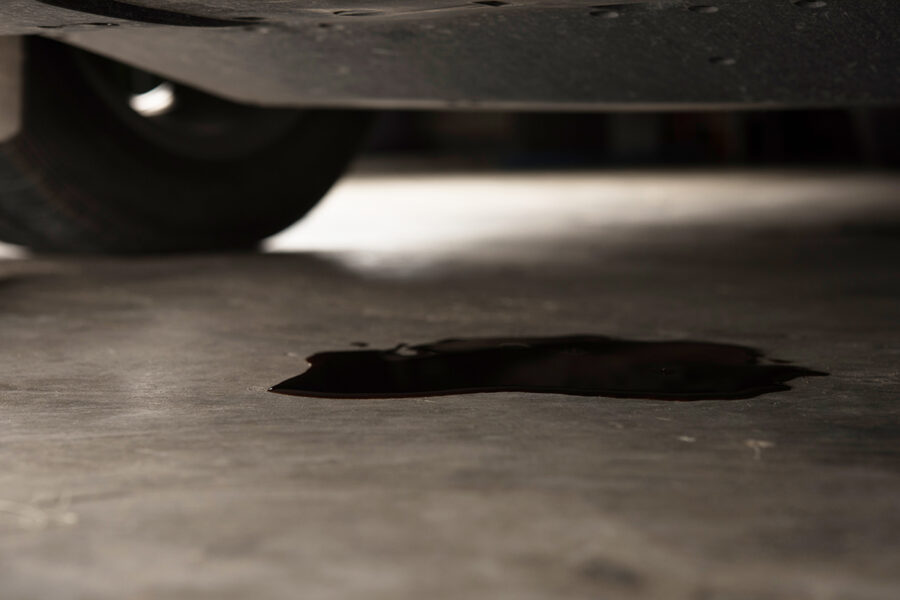
Running the defroster all winter actually helps here, because on most vehicles it engages the compressor for you. That is one more reason a defroster that has stopped bringing the AC along is worth investigating rather than living with. Refrigerant oil that has escaped also has to go somewhere, so if you have been wondering about spots on the driveway, What’s That Leak Under My Car? is worth a read.
Why Before the First Frost Beats During the First Heat Wave
NOAA’s National Centers for Environmental Information, working from the 1991-2020 U.S. Climate Normals, puts the Northeast’s first fall freeze from mid-September to early October. In practice around Washington County, the first hard morning tends to arrive well before most people have thought about their car’s climate control at all.
That timing is the whole argument for a fall AC check.
You catch a leak while it is still just a leak. A system that is a little low in September is a straightforward diagnosis. The same system in June, after nine months of a starved compressor cycling every time you hit defrost, can be a much bigger repair.
Your defroster works when you need it most. Getting the AC right in early fall means the first frosty morning is a non-event. You clear the glass and go.
You are not standing in the June line. Every shop in southwestern Pennsylvania sees the same wave on the first hot week of the year. Fall appointments are easier to get at a time that suits you.
You find out before winter, not during it. Nobody wants to learn their compressor is done on the morning of the first real snow.
Fall is already the season for the rest of your cold-weather prep, and cold air pulls tire pressure down at the same time the fog shows up, as we explained in How Temperature Affects Tire Pressure and Performance. Stacking the AC check onto that same visit is the efficient move.
What Actually Happens During an AC Service
An honest AC service is a diagnosis first, not an automatic refill. A technician checks system pressures, looks for the leak with dye or electronic detection, inspects the compressor, hoses, condenser and fittings, and confirms the compressor clutch is engaging. If refrigerant needs to come out, it is recovered rather than vented. The system is evacuated, the oil charge is verified, and the refrigerant is put back in to the manufacturer’s specified weight, which matters, since both too little and too much cause problems.
This is also why an AC recharge in Washington, PA is a shop job rather than a parts-store can. Under Section 609 of the Clean Air Act, the EPA requires that anyone who repairs or services a motor vehicle air conditioning system for payment be trained and certified through an EPA-approved program and use certified refrigerant handling equipment. Beyond the legal side, topping off a system without finding the leak just puts refrigerant back into a container with a hole in it, and it can mask the low-charge condition that is quietly wearing out the compressor. You can see how we handle the whole process on our AC Service & Recharge page.
As for what any of this takes to put right, that depends entirely on the vehicle and on what the inspection turns up. Rather than guess at a number here, ask us for a current quote on your specific vehicle and we will give you a straight answer before any work starts.
Cold-Morning Habits That Help Until You Get It Looked At
These will not fix a broken system, but they will get you down the road more safely on the mornings between now and your appointment:
- Turn recirculate off. AAA is specific about this: with recirculate on, you are re-breathing the moist air already inside the car. Switching it off pulls in drier outside air.
- Leave the AC button engaged with the heat. If your compressor still works, this is the single biggest difference you can make.
- Aim the airflow at the windshield, not your feet. Floor vents do nothing for the glass.
- Crack the windows for thirty seconds. Dumping the humid cabin air is a fast head start.
- Clean the inside of the glass. Film from off-gassing plastics gives condensation something to cling to.
- Clear snow off the cowl at the base of the windshield. That is where your fresh air intake lives, and packed snow means you are feeding the system wet air.
- Shake off coats and knock snow off boots before getting in. Every bit of moisture you keep out is moisture the defroster does not have to remove.
The Short Version
Your defroster borrows the air conditioner to dry the air before it hits the glass. When the AC quits, the heat keeps coming but the drying stops, and the symptom shows up as a windshield that will not clear rather than a cabin that will not cool. The failure hides for months while a low charge starves the compressor of the oil that travels with the refrigerant. And the ideal time to deal with all of it is now, before the first frost, not next June when the whole county calls at once.
If your windshield has been taking too long to clear, or your AC was weak by the end of last summer, have it looked at while it is still a small job. Our team at West Tire & Auto Center in Washington, PA has been keeping local vehicles safe and comfortable since 1962, and we will tell you honestly what your system needs and what it does not.
Schedule Your AC Check Before the First Frost
Do not wait for a foggy windshield on a 28-degree morning to find out your air conditioning stopped working months ago. West Tire & Auto Center in Washington, PA can inspect your AC system, find the leak, and get your defroster drying the air the way it is supposed to.